





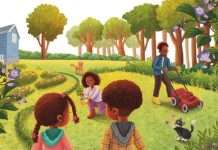

Emmy-nominated CNN national correspondent and children’s author René Marsh has spent more than two decades telling stories on a national stage—but her newest book, The Nature of Change, is rooted in the most personal story of all: her journey through motherhood, loss, and healing.
After losing her son, Blake, to pediatric brain cancer, Marsh found herself turning to nature for comfort. In the quiet moments outdoors, she began noticing lessons she had never seen before—trees letting go of their leaves yet standing tall, a cracked branch surviving winter and blooming again. These small, powerful observations became the emotional foundation of her book.
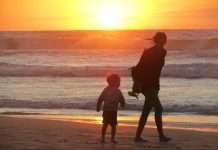
Blake’s presence remains woven into her family’s daily life. Marsh talks about him often with her two‑year‑old daughter, celebrates his birthday each year, and hangs his stocking alongside the family’s during the holidays. A sunset from her kitchen window always reminds her of him. Marsh describes The Nature of Change as inspired by Blake but written for her young daughter. Through gentle metaphors—a spider rebuilding its web, flowers returning after winter—children can grasp big ideas like hope and perseverance without overwhelming explanations. Parents can simply say, “Remember the spider,” and suddenly resilience becomes something a child can see and believe in.

For moms navigating grief or major life transitions, Marsh offers this reminder: hope often appears in small, simple moments. “Hope is the bridge to the other side of what feels insurmountable,” she says.
Family, faith, and community have been essential to her healing. Marsh is also deeply committed to raising awareness about the disparities in pediatric cancer research—especially the lack of child‑specific treatments and the limited funding dedicated to pediatric cancers.
Blending emotional awareness with the natural world was intentional. Nature is accessible to most children, offering a grounding alternative to screens and a place to explore big feelings safely. Marsh hopes families use the book as a “soft place to land”—a starting point for conversations about change, loss, and the courage to begin again.
Writing the book was healing for her, too. It became a way to honor Blake’s legacy and share the wisdom she found in her grief with a new generation. Through her story, families are reminded that even in the hardest seasons, there is beauty, renewal, and the promise of growth. Motherhood has changed the way she approaches journalism, too. After losing Blake, she became more attuned to the humanity behind every story. “The worst thing that happened to me made me better,” she says. “I believe I am a better journalist.”
Q&A with René
SFBAM: What sparked the idea for Kit and Amal’s story, and how did nature become the anchor for the lessons you wanted to share with young readers?
RM: My motherhood journey involves becoming a first-time mom, experiencing the vulnerability and the deepest, purest love a mother can have for her child, and then losing it. It is a devastating story, but it is mine.
The loss of my son, Blake, to pediatric brain cancer led me to write my second children’s book. In the depths of my grief, I spent a great deal of time outdoors, just staring into the distance, struggling to make sense of the world. In those quiet moments, the nature around me began to illustrate some of life’s most profound lessons.
My grief had paralyzed me to make me still enough to notice and receive those lessons. I watched the trees lose everything in the fall, letting go with grace, but they remained standing tall despite their bare branches. I saw a cracked tree limb that had snapped under the weight of a massive snowstorm, dangling by a shred of bark for an entire season, only to my surprise sprout leaves the following spring. What looked broken and dead was still blooming; a reminder that even in a fractured state, growth is still possible.
Those lessons meant everything to me in those moments. They gave me the encouragement I needed. It was through that experience of loving, losing, and continuing to live that this book was born.
I intend to share those lessons with a younger generation, in hopes of better preparing them for life’s inevitable challenges.
SFBAM: You’ve shared that this book was inspired by the loss of your son, Blake. How did your grief shape the heart of this story?
RM: I honestly never saw nature as a teacher until grief gave me a new perspective. I had always appreciated its beauty, but I can’t say I had ever truly taken the time to learn from it. Now I see how closely it mirrors our emotional lives, and that’s what makes nature such a great teacher.
I’ve spoken about the trees, but there is so much more. The persistence and consistency of the sun, the clouds that get pushed and carried by the wind.
Together, they illustrate something profound: life is part consistency, part surrender. Knowing how to move between those two states is essential.
There is so much wisdom surrounding us, if only we slow down enough to notice.

SFBAM: Are there parts of nature that now hold special meaning for you because of Blake?
RM: Blake loved to be outside in general. But something about the sunset I can see from my kitchen window always reminds me of Blake.
SFBAM: What do you hope parents will talk about with their kids after reading this story together?
RM: I hope it will open up the lines of communication for kids to explain their feelings and for them to begin to understand how to navigate those feelings.
I hope it will lead to more outdoor time together. I hope parents might incorporate into their daily conversation with their kids the question, what did nature teach you today?
To extend the experience, there is also a free downloadable journal on my website, renemarsh.com, with guided prompts that invite children to slow down, observe, and reflect.
For example: the wind changes all the time. It can move fast, it can move slow. It reminds us that change is ok. It’s a part of life. What changes are happening in your life?
We’ve also created a curated Spotify playlist featuring the sounds of nature, designed to make this a multi-sensory experience. If bedtime is a struggle in your house, like it is in mine, the audio experience can be a nice way to wind down before bedtime and after story time. Both resources are available as free downloads on my website.
SFBAM: Many moms in our community have experienced loss or major life transitions. What would you want them to know about finding moments of hope again?
RM: Moments of hope are in those simple moments. Like the broken tree limb that bloomed the next spring that I mentioned above. Sometimes it’s in casual conversations.
Be on the lookout for those moments because what I told myself during my most difficult times was “Hope is the bridge to the other side of what feels insurmountable.”
SFBAM: How do you nurture your own emotional well‑being while juggling parenting, writing, and a demanding career?
RM: Making sure I don’t pack my days with an overwhelming to-do list and making sure the day’s to-dos include things that bring me relaxation and joy. Acupuncture has been very helpful in balancing my mental well-being when grief gets the best of me. I started running outdoors about a year ago, and that gives me incredible clarity and one-on-one time with nature, which is a nice boost emotionally, and I am gentle with myself. Writing is also a part of my therapy. Creative writing, but also journaling.
SFBAM: You’ve spent more than two decades telling stories on a national stage. How has journalism influenced the way you write for children?
RM: I am a storyteller by profession, and so I think those skills carry over nicely regardless of genre, but in many ways it’s very different. As a journalist, I have no control over the story message or the story itself, in that I simply follow the facts. In the worlds I create with my imagination for children’s books, I get to control the story’s beginning, middle, and end. I started writing children’s literature, ironically, at a time when I felt like I had very little control over my life. Life was happening to me. And so writing stories gave me the control I lacked in the tragic moments of my life, and there was comfort in writing a story with a happy ending.
SFBAM: How do you hope your story contributes to broader conversations about health and wellness, motherhood, and resilience?
I am and will always be passionate about raising awareness about the disparities in pediatric cancer research and funding. Many people have no idea that the vast majority of pediatric cancer treatments consist of chemotherapy drugs developed for adults and their adult bodies, and those potent drugs are simply dosed down for kids. It’s basically a one-size-fits-all approach, and because of that, these cancer drugs that are supposed to save these young children’s lives do even more damage to their bodies. Pediatric cancer research gets an inadequate amount of funding for research because pharmaceutical companies would rather focus research dollars on adult cancers, as it’s more profitable for them, simply because more adults have cancer compared to kids. These are the issues I’m passionate about raising awareness about because children don’t vote, and they don’t have the political power to change this. If loving adults don’t push and speak for them, who will?
Our stories are so powerful. I hope that being a living example of someone who has loved, lost, and continued to live will be the encouragement others need.
_________________________________________________________________

About René Marsh
René Marsh is a CNN national correspondent who has spent more than two decades telling stories as a journalist. She was inspired to write children’s books following the diagnosis and loss of her son, Blake, to brain cancer at age two. Her first book, “The Miracle Workers: Boy vs. Beast,” was featured on Today, ABC, and CNN, with 100% of proceeds donated to pediatric brain cancer research. Marsh lives in the Washington, D.C., metro area with her husband and daughter. See more at https://renemarsh.com/.