








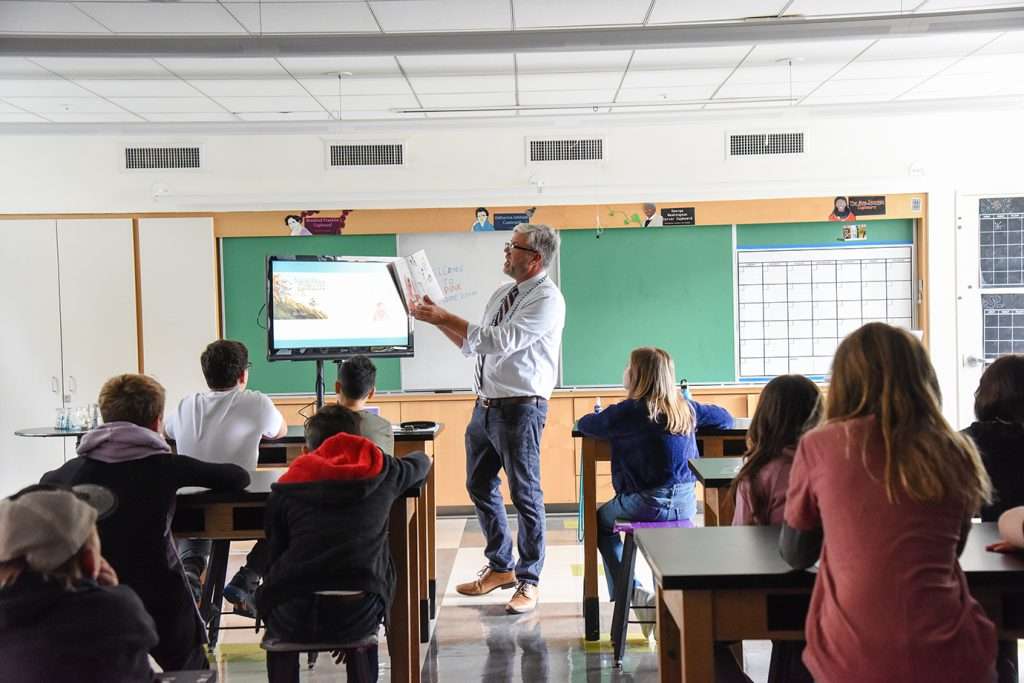
Sterne School is unique among independent schools in that the youngest students we serve are fourth graders. As the fourth-grade California History teacher (I’m also the Head of Sterne’s Lower & Middle School), it is my pleasure to get to know this group of students, understand their learning profiles, and match their inherent curiosity with stories of Indigenous Californians, the Gold Rush, and the origins of neighboring Chinatown. Our fourth graders are integral members of our community, and they help set the tone for the Lower School experience.
Fourth grade happens at such an important time in learning development.
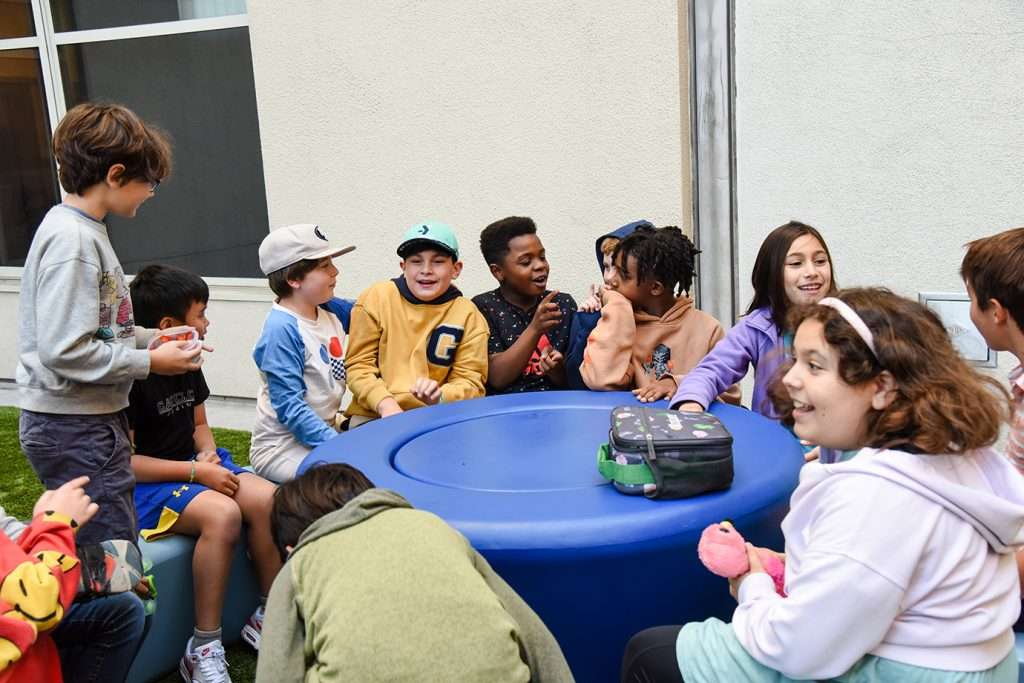
 The curiosity that all kids come to school with is fueled by an intellect capable of engaging with complex ideas about the world and the people around them. Students are hungry for knowledge and determined to let people know that they understand things in ways that are surprising and new. They are also gaining a sense of themselves in relation to their peers, taking the first steps towards adolescence when the perception of their peers will become paramount to their identity.
At Sterne, as 4th-grade teachers, we understand the delicate place these students find themselves in. When school is a place that feels good, when a student’s intellect is seen and validated, and when their peer relationships enhance their self-perception, then we can say with certainty that our students are on a trajectory that indicates success in middle school and beyond.
A student’s understanding of themselves as a learner has a major impact on their success in school.
 When obstacles to learning present themselves, whether that’s in the form of a learning difference or a school situation that isn’t a good fit, the consequences can be severe, and they tend to show up in the upper elementary grades. We want our fourth graders, and all our students, to understand themselves first and foremost as competent learners with strengths in their learning profiles, even as they may have lagging skills in certain areas.
We want them to know that lagging skills can be addressed and, with the right guidance and intervention, they should not hold a student back academically.
The best part of getting to know our fourth graders in the California History classroom is that I get to watch them become fifth graders the next year, then sixth graders, and eventually middle school students. Watching their curiosity grow and mature as they do, and then seeing them thrive as older students, is a source of pride in the work we do here at Sterne.
___________________________________________________________________
Matt Poynter, Head of Lower & Middle School, Sterne School
 Matt has been working with neurodiverse learners in the Bay Area for twenty years. Before coming to Sterne School, Matt was Principal of Stanbridge Academy in San Mateo, where he oversaw curriculum and instruction for the K–12 program. Matt is excited to help develop Sterne’s Lower and Middle School emphasis on strengths-based education in a learning context that includes intervention for lagging skills. Matt holds an M.S. in Special Education from San Francisco State University, an M.S. in Educational Leadership from the University of the Pacific, and a B.A. in Secondary English and Reading Instruction from Indiana University.