













A pool or patio is only as good as the atmosphere around it. Most outdoor spaces are designed for daylight and forgotten after sunset, which is a waste of some of the most comfortable hours in the day.
Fire bowls fix that. They extend the usable hours of your outdoor space, add warmth on cool evenings, and give the whole area a sense of intention. Here are six proven styling approaches to get the most out of them.
Place Fire Bowls at Natural Entry Points
Begin by thinking about how people actually move through your outdoor space. Fire bowls for pools work especially well when they flank a gate, a staircase leading to the pool deck, or the main path from the house to the patio. Placing them at these transition points creates an immediate sense of arrival; you’re stepping into somewhere that feels intentional. For a look that ties into your existing outdoor furniture, fire bowls for pools come in materials like copper, steel, and stone that coordinate naturally with both modern and traditional patio designs.
This approach also clears up a practical problem. Entry points are usually the first thing a guest sees, and a bare gate or plain step doesn’t leave much of an impression. A pair of fire bowls on either side of that threshold shifts the feeling of the whole area, instantly.
Keep the bowl height in proportion to the surrounding structure. A low entryway pairs well with smaller, squat bowls; a taller fence or pergola entry can handle a taller pedestal style.
Use Symmetry Along the Pool Edge
Symmetry is one of the oldest design tools around, and it works just as well outdoors as it does inside. Lining the long edge of a pool with evenly spaced fire bowls creates a runway effect that’s genuinely striking at night. The reflections off the water add a second visual layer you simply can’t get anywhere else.
Four bowls spaced equally along one side is a solid starting point for a standard rectangular pool. Six works better for a larger pool or a more formal property. Don’t spread them so far apart that the line looks broken; the eye should travel the full length of the pool in a single sweep.
Consistency is everything with this layout. The bowls need to match in size, height, and material. Mixing styles here tends to undercut the effect; save the eclectic combinations for areas where asymmetry is actually the point.
Match Bowl Materials to Your Existing Hardscape
A fire bowl that clashes with its surroundings reads as an afterthought. The material of the bowl itself, cast stone, corten steel, copper, or concrete, should feel like it belongs to the same design family as your patio surface, retaining walls, and pool coping.
Concrete and cast stone bowls tend to suit natural stone patios and flagstone pool surrounds well. Corten steel, with its warm rust finish, looks sharp against modern concrete decks or dark pavers. Copper bowls develop a patina over time and pair naturally with wood elements and warmer stone tones.
The practical move here is to look at what you already have before you buy anything. Pull up a photo of your patio or pool area and identify the dominant materials. The right bowl material will feel like it was always supposed to be there.
Layer Fire With Water for Visual Drama
Fire and water are natural counterpoints – one warm, one cool – and placing them in the same visual frame creates a tension that most outdoor spaces never achieve. A fire bowl positioned near a pool, a water feature, or even a simple fountain draws directly on that contrast.
The important thing is proximity without interference. You don’t want flames overhanging a body of water, and you want enough distance that wind won’t push heat or embers toward a fountain pump or equipment. A distance of 4 to 6 feet from the water’s edge is a reasonable buffer for most backyard setups.
At night, the reflection of the flame on the water’s surface is the payoff. It doubles the visual presence of the fire without adding any additional hardware.
Control Scale: Bowl Size Has to Match the Space
Undersized fire bowls on a large patio just disappear. Oversized ones on a small deck feel oppressive and can be a real safety concern. Scale is the most common styling mistake people make with fire features, and it’s genuinely easy to avoid.
As a general rule, a solo fire bowl on a 12-by-12-foot patio section should have a bowl diameter of at least 24 inches. For a statement piece on a large pool deck, 36 inches and above gives you the presence that space demands. For a pair of entry bowls or symmetrical poolside arrangements, you can go slightly smaller, since the repetition handles the visual work.
Height matters just as much as diameter. A low, wide bowl sits naturally at seating level, good for conversation areas where you want warmth close by. A taller pedestal-mounted bowl suits walkways and entry points where you need the flame visible from a distance.
Anchor Fire Bowls With Surrounding Elements
A fire bowl sitting alone in the middle of a patio reads as unfinished. The strongest styling approach treats the bowl as the center of a small vignette, surrounded by supporting elements that give it context.
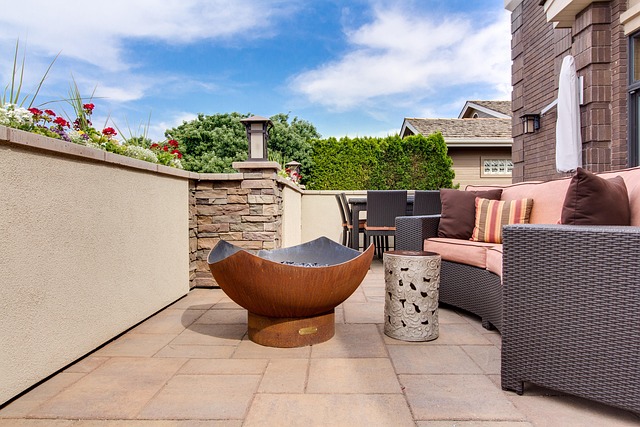
On a patio, that might mean outdoor chairs or a sectional arranged around the bowl, with low planter pots or ornamental grasses flanking the sides. The bowl becomes the focal point of a seating area rather than a standalone object. It also solves a functional problem: people naturally gravitate toward fire, so designing the seating to face inward makes the whole space more usable.
Around a pool, you can use raised planting beds or border hedges to frame the bowl from behind. This creates depth and gives the flame something to read against, especially important in large open spaces where a lone fire bowl can look lost.
Styling fire bowls well comes down to intention. Think about where people enter your space, where they gather, and what catches the eye when looking across the pool or patio at night. A fire bowl placed with those questions in mind does far more than generate heat; it gives your outdoor space a focal point that holds all evening long. The best setups treat the bowl not as decoration but as functional architecture, and the right styling choices follow naturally from there.