













One day, your child is cozy as can be in their beloved dinosaur pajamas. A week later, the pajama pants are halfway up their calves! Between surprise growth spurts, hand-me-downs from relatives, and clothes bought a size ahead, dressers and closets become a jumble of outfits.
Some clothes fit perfectly, others are waiting their turn, and a few haven’t made an appearance since last winter. If finding an outfit has become a daily guessing game, these tips for organizing kids’ clothes between sizes will bring order to the chaos.
1. Sort Through Clothes That Currently Fit
Before buying storage bins or reorganizing the closet, spread the clothes across the bed and figure out what actually fits. Kids’ clothing sizes aren’t always consistent, so a pair of 4T pants from one brand could fit differently than another pair with the same label. You’ll get a much more accurate picture by looking at the clothes themselves.
Have your child try on anything questionable, checking the waistbands, sleeve lengths, and overall fit. If the thought of a full wardrobe try-on session inspires dramatic sighs, tackle one category at a time. Separate everything into three piles: clothes that fit now, pieces awaiting the next growth spurt, and outfits that have officially been outgrown.
Once you’ve finished sorting, return the current wardrobe to the dresser. The remaining piles will have their own destinations, so there’s no reason to squeeze everything back into the same drawers.
2. Give Current Sizes Dedicated Drawer Space
Getting dressed in the morning is chaotic enough when someone can’t find a shoe. There’s no reason to complicate things with drawers full of outgrown clothes.
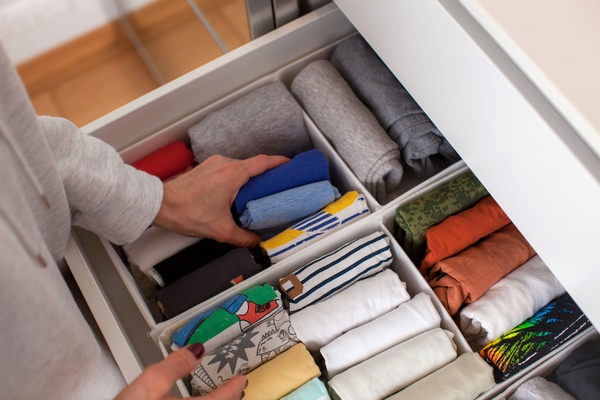
Try folding shirts vertically and placing them side by side inside the drawer. Kids will be able to spot their favorite designs at a glance, and they won’t have to dismantle an entire stack to grab one shirt. Drawer dividers are handy for separating socks and small accessories that usually end up tangled together.
For children learning to dress themselves, arrange everyday outfits within reach. Picture labels featuring shirts or pants are a fun addition for little ones who haven’t learned to read. They’ll know exactly where everything belongs, even if their folding skills are still a work in progress.
3. Reserve a Spot for the Next Size
Sometimes, kids find themselves in that awkward stage between clothing sizes. Their usual shirts have begun riding up, but the next size leaves their hands disappearing into the sleeves. Meanwhile, a few pairs of pants fit perfectly, even though the labels suggest they’re meant for next year.
Designate a small drawer or closet shelf for these almost-ready outfits. Having them nearby means there’s no frantic search through storage when a sudden growth spurt arrives. Plus, the current wardrobe won’t get crowded with clothing that still has a little growing room.
Every few weeks, take a peek at the collection and check whether anything is ready to join the regular rotation. Move suitable pieces into the dresser and transfer outgrown garments to their designated basket.
4. Store Future Sizes in Bins
Between generous grandparents, hand-me-downs from cousins, and irresistible clearance racks, it’s surprisingly simple to accumulate an entire wardrobe of clothes that won’t fit until next year. Rather than leaving everything stuffed into shopping bags, give those future outfits a proper home.
Clear plastic bins are great for this job because the contents remain visible, and fitted lids protect clothing from dust. Look for containers that slide beneath beds or fit neatly onto closet shelves. There’s no reason to sacrifice an entire room to children’s clothing storage.
Separate Clothing by Size
Sort the collection according to the sizes printed on the tags, giving each size its own container. If there aren’t enough clothes to fill separate containers, use fabric bags or dividers within a shared bin. Label the sections so that the next batch of outfits is simple to locate when the time comes.
5. Account for Seasonal Clothing Changes
A child wearing size 4T in February could be sporting 5T by the time summer rolls around. Unfortunately, those adorable winter sweaters won’t be much use during a July heat wave. When organizing future sizes, think about the weather as much as the numbers printed on clothing tags.
Group warm-weather outfits together, including shorts, swimsuits, and sundresses. Give winter coats, fleece pajamas, and thick sweaters their own space. This arrangement prevents seasonal clothing from getting mixed into a collection that won’t suit the weather.
6. Set Up a Basket for Outgrown Clothes
Kids don’t politely announce when they’ve grown out of an outfit. Usually, the discovery happens just before school. Instead of tossing those clothes back into the laundry pile, establish a place to collect them.
Put a small basket in the bedroom closet or laundry room. Whenever a garment becomes too snug, drop it into the basket so that it won’t accidentally return to the dresser. This works beautifully for shirts with short sleeves, pants with tight waistbands, and pajamas that have seen their final bedtime.
Once the basket fills up, sort through the contents and decide what to save, donate, or recycle. Donating keeps items out of landfills, so try to give the clothes in good condition another chance at benefiting another family.
7. Schedule a Monthly Wardrobe Check
Even the most beautifully organized dresser won’t remain perfect when a child grows an inch seemingly overnight. Fortunately, maintaining the system doesn’t have to consume an entire Saturday afternoon.
Pick one day each month to check the clothing in regular rotation. It’s highly doubtful that your little one will have the energy to try on every outfit. The best solution is to sort through the items you know no longer fit.
Look at everyday pants, school outfits, and pajamas to determine whether anything has become too snug. Then, check the next-size collection for garments that are ready to wear. Quick monthly check-ins will prevent the closet from becoming a weekend-long project.
Find a Place for Every Clothing Size
Kids grow quickly. It’s normal for their wardrobe to be stuck in the past. All you need to organize clothes between sizes is monthly closet checks and designated storage bins. Day by day, you’ll have a system that makes getting your kids dressed in the morning a little less complicated.