












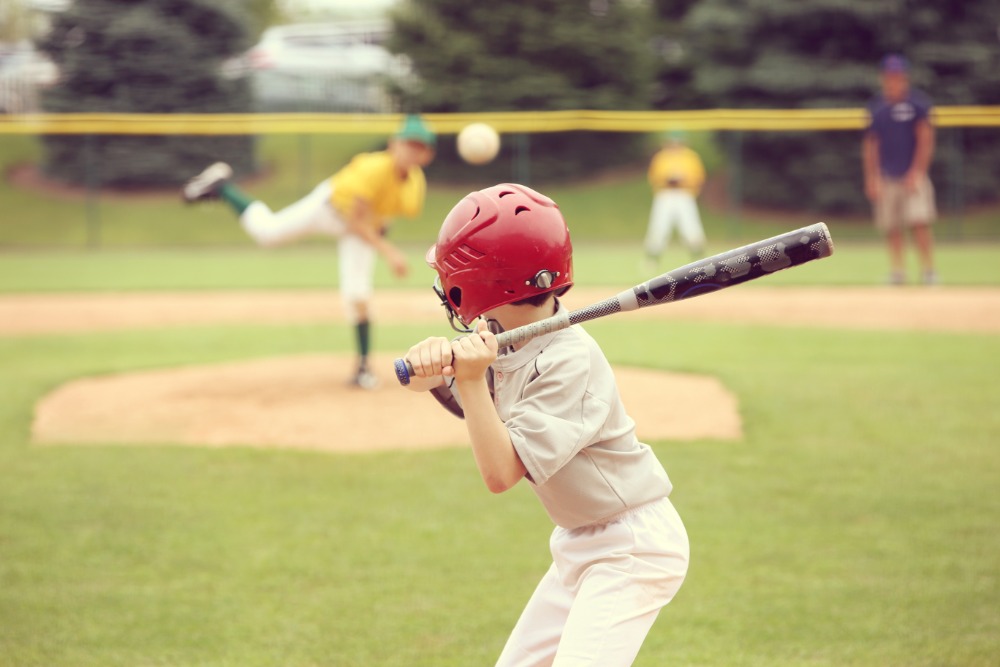
Bay Area parents know the youth sports calendar can turn a normal Saturday into a logistical decathlon. One child has a game in San Mateo, another has practice in Oakland, and someone forgot their cleats in the trunk. Somewhere in the middle of all that, your young hitter wants to get better.
The good news: kids do not need a private stadium, a radar gun, or year-round pressure to improve. You can help your kid improve as a baseball or softball hitter with a few balls, a tee, and a can-do attitude! We’ll show you how, below.
Build a Simple At-Home Routine
A short driveway or backyard session can help more than a marathon cage rental. Set a timer for 10 to 15 minutes, use foam balls or whiffle balls, and focus on one skill at a time. For younger players, soft toss into a net or open space works well. For older players, tee work can sharpen contact points.
Rotate through three easy stations: tee swings, soft toss, and dry swings. Tee swings help with balance, soft toss builds timing, and dry swings let kids feel their body sequence without chasing results.
Teach Balance from the Ground Up
Perhaps the most important skill that will help your kid improve as a baseball or softball hitter is balance. Strong swings start with the lower body. Encourage your hitter to begin in an athletic stance, with knees slightly bent, feet steady, and weight balanced. A kid who lunges forward loses power and makes contact harder than it needs to be.
Try teaching your kid to freeze after contact. After each swing, ask your child to hold their finish for two seconds. If they stumble, spin, or fall forward, they can reset their base before the next rep.
Utilize Weighted Swings
When you watch a professional baseball or softball game, if you pay attention to the on-deck batter, you’ll likely see them warm up with weights on their bat. Weighted swings are useful for warming up your muscles before an at-bat, but they also make for great training tools.
Weighted swings help batters improve bat speed with control and precision. These heavier swings teach batters to better accelerate their bat through the strike zone and hit the ball with greater velocity.
Make Practice Feel Like a Game
Kids improve when practice feels alive. Create mini challenges, such as hitting three line drives in a row, driving the ball up the middle, or making contact on five straight tosses. Keep score lightly, and celebrate adjustments as much as results.
For Bay Area families juggling school, traffic, weather, and packed weekends, consistency beats intensity. A few focused swings after homework can build skill without taking over the evening.
Know When To Stop
The best practice sessions end before everyone gets cranky. Watch for tired swings, slumped shoulders, or rushed mechanics. Once your child loses focus, wrap up with one good swing and call it a win.
Hitting takes patience, repetition, and a lot of imperfect attempts. Give your child room to learn, laugh, and reset. The scoreboard will matter on game day, but the best progress starts when practice feels safe enough to try again.