









Summer has a funny rhythm for parents.
At the beginning, everyone is relieved. The alarms are off. The lunchboxes are away. The calendar feels a little less demanding. Then, somewhere around late July, a new feeling creeps in: school is coming.
Many parents start wondering how to help their kids enjoy the rest of summer while also easing them back into focus, patience, and routine. We want them to play. We want them to rest. We also want their brains to stay awake.
That is one reason I have become such a believer in chess.
I did not start as someone trying to raise a chess champion. In fact, my interest in chess grew out of something much more personal. During COVID, my son began playing, and I started noticing that the game was doing more than teaching him how pieces moved across a board.
Chess was giving him a place to think.
That experience eventually became part of what led me to write Decoding Genius, but at the time, I was just a dad watching my son find something that made him feel capable.
Chess gave him a way to slow down, make choices, recover from mistakes, and try again. It helped him build confidence in a way that felt different from many other childhood activities. There was no loud field, no tryout, no scoreboard full of spectators. Just a board, a few pieces, and one decision at a time.
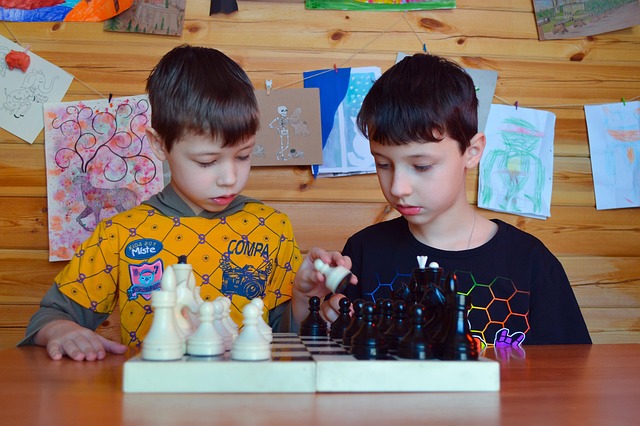
That may be why chess works so well as a summer activity. It feels like a game, not schoolwork. Kids can play for five minutes or fifty. They can solve a puzzle, play against a parent, challenge a sibling, or try an online game. They do not need to be naturally “good at chess” to benefit from it.
They just need a chance to engage with it.
One of the best things about chess is that every move has a consequence. Move too quickly, and you may lose a piece. Pause for a moment, and you may see something you missed. Try a plan, and it may work, or it may fall apart. Either way, the board gives immediate feedback.
For kids, that is powerful.
So much of childhood involves adults saying, “Think before you act.” Chess lets kids practice that idea in a concrete way. They can see what happens when they rush. They can also see what happens when they take a breath, look again, and consider one more possibility.
Those are not just chess skills. Those are school skills. Life skills, really.
A child who learns to pause before moving a knight may be practicing the same muscle they need before blurting out an answer, giving up on a math problem, or reacting too quickly to frustration. A child who loses a game and comes back to play again is practicing resilience. A child who starts to notice patterns is building confidence in their ability to think.
Parents also do not need to be chess experts. This is important, because many adults hear “chess” and immediately think, “I’m not qualified.”
You are.
You can learn alongside your child. You can start with just the pawns. You can watch a beginner video together. You can set up one puzzle and ask, “What do you notice?” You can play badly and laugh about it. In some ways, that may be even better. When kids see adults learning too, they get the message that being a beginner is not embarrassing. It is normal.
The goal is not to turn summer into a training camp.
The goal is to give kids something engaging that also builds useful habits. Start small. Put a chessboard on the table. Try one short game after breakfast or before bed. Let the first few games be messy. Praise the thinking, not just the winning.
Say things like, “I like how you slowed down before that move,” or “You noticed something you didn’t see last time,” or “That was frustrating, but you stayed with it.”
That is where the real growth happens.
As school gets closer, many families look for ways to help kids transition back into learning mode. Chess can be one of those gentle bridges. It keeps the summer feeling playful, but it also asks kids to focus, plan, remember, adapt, and keep going after mistakes.
That combination is rare.
For my family, chess became much more than an old board game. It became a window into how my son thinks, what helps him feel capable, and how confidence can grow when a child finds the right kind of challenge.
So before school starts, consider giving chess a place in your summer. Not because your child needs to become the next grandmaster. Not because every activity has to be productive. But because sometimes the simplest games give kids exactly what they need: a quiet place to think, fail safely, try again, and discover what they are capable of one move at a time.
________________________________________________________________________________
 Dan Shapiro is the author of Decoding Genius: The Unexpected Lessons of After-School Chess Club, coming August 2026. After seeing how chess helped his son build confidence and decision-making skills during COVID, Dan began exploring what this ancient game can teach kids far beyond the board, from focus and patience to resilience, memory, and the ability to think ahead. Learn more at www.decodinggeniusbook.com.