









“The brain that can’t focus can’t learn. And the body that can’t move can’t focus.”
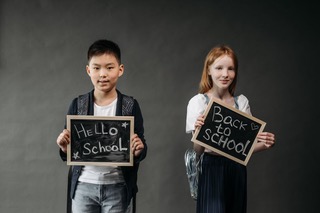 Back to school season is here — and this year, we’re sending our children into classrooms facing something bigger than new backpacks and first-day jitters. We are in the middle of what researchers are calling a learning recession, and it has been building for a decade.
New data from Stanford University found that reading scores are down in 83% of school districts over the past ten years, while math performance has fallen in 70%. The trend cuts across income levels, geography, race, and political affiliation. This is not a COVID story. This started before 2020 and the pandemic simply accelerated what was already in motion.
The attention span problem nobody wants to talk about
At the heart of the learning recession is something deceptively simple: children cannot focus. A recent survey found that 88% of teachers believe their students’ attention spans are getting shorter. The culprits are familiar…quick-cut social media, constant screen stimulation, and a decade of content designed to grab and release attention in seconds rather than build it.
Teachers are already responding with creativity like “brain breaks,” movement snacks, and attention-reset strategies mid-class. But these are band-aids on a wound that needs deeper treatment. What children need are not just occasional breaks from distraction. They need a daily practice that builds the attention muscle itself.
What yoga does that a brain break can’t
A brain break gives a child a momentary reset. Yoga gives a child a lifelong skill. There is a meaningful difference, and it shows up in the research.
 Builds sustained attention: Holding a pose, following a sequence, and staying present through breath practice all train the same neural circuits that children need to read, solve problems, and listen deeply in class.
 Regulates the nervous system: A dysregulated nervous system cannot learn. Breathwork and mindfulness calm the fight-or-flight response and prepare the brain for the focused, receptive state learning requires.
 Strengthens body-mind connection: When children learn to listen to their bodies, to notice tension, energy, and calm, they develop the self-awareness that makes self-regulation possible. That is the foundation of every learning skill.
 Builds confidence to try: Children who feel physically capable and emotionally grounded approach learning with the resilience and curiosity that test scores can never fully capture, but teachers see every day.
The Mississippi model — and what it tells us
One bright spot in the Stanford data is Mississippi, which climbed into the top 10 states for fourth-grade reading by investing in early childhood education, teacher development, and evidence-based learning models. The lesson is clear: investment in the whole child, not just test prep, works.
That is exactly the It’s Yoga Kids® philosophy. We have been investing in the whole child since 2005 — body, mind, and heart — because we have always known that a child who feels strong, calm, and confident is a child who is ready to learn.
This back-to-school season, start with the body.
Before the homework. Before the grades. Before the pressure. Give your child a yoga practice and watch what happens to everything else. Focus sharpens. Stress eases. Confidence grows. And learning becomes possible again.