











As moms, we’re always looking for ways to help our kids feel connected to the world around them — to slow down, notice the tiny things, and understand that nature isn’t something “out there,” it’s something we’re part of. That’s why we love what the California Academy of Sciences is doing this spring and summer.
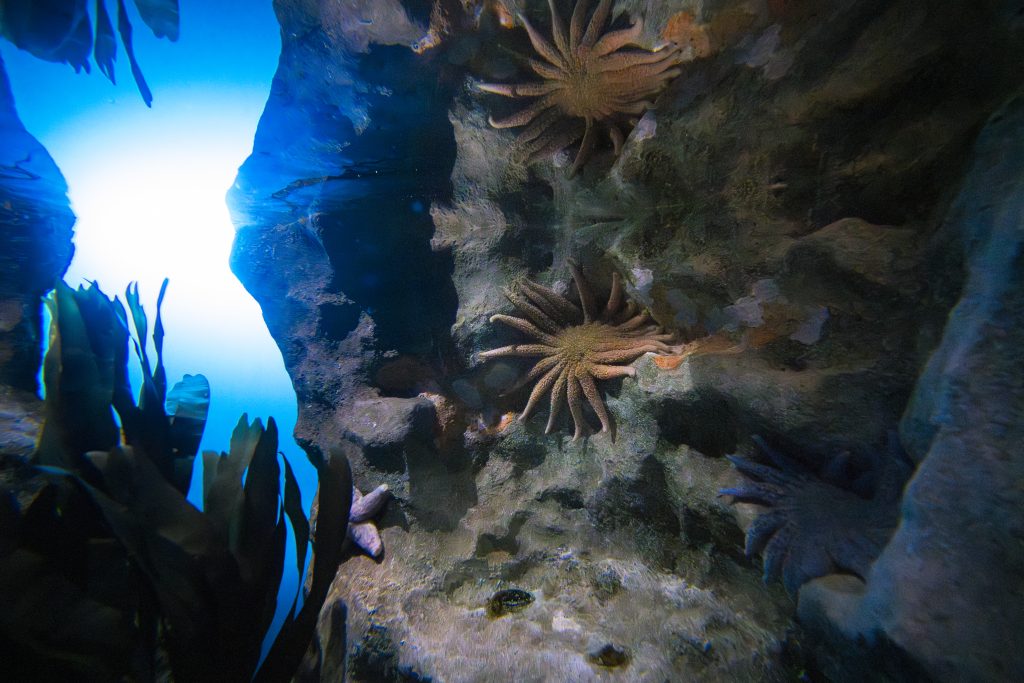
While climate change and biodiversity loss can feel overwhelming, the Academy is approaching it with something we all need more of: hope, action, and community. Their scientists are doing incredible work behind the scenes — from helping reintroduce a long‑lost San Francisco dune butterfly to caring for critically endangered 24‑armed sunflower sea stars at Steinhart Aquarium. It’s the kind of science that reminds you just how much is still possible.
All of us can be part of the solution. Through a full season of community science events in local parks, beaches, and tidepools, the Academy is helping people reconnect with nature in the most hands‑on way. You simply show up, explore, snap photos of what you see, and those observations become real data that helps conservation teams protect local wildlife. It’s simple, meaningful, and surprisingly fun for kids. These events are open to everyone, no experience needed, and they’re a great excuse to get outside with your family and learn something new together.
Read on for more ways the Academy is helping our community reconnect with nature — and how your family can join in.
COMMUNITY SCIENCE EVENTS, APRIL – AUGUST

WHEN: April 24-27 (observation period)
April 28-May 10, 2026 (identification period)
City Nature Challenge, the largest annual biodiversity census in the world, returns for its 11th year of connecting people through local nature and their communities. From participating in organized biodiversity surveys to recording neighborhood wildlife, City Nature Challenge encourages community scientists of all levels to explore their local environment—all while contributing to biodiversity science and conservation. Identification of photographed species will be crowdsourced through the online community, with results announced on May 13.
How to participate: Photos and sound recordings of any wild plant, animal, fungus, slime mold, or other evidence of life (scat, fur, tracks, shells, etc.) can be uploaded to the iNaturalist app or website, where a global community of naturalists confirms identifications. Wildlife can be found anywhere: homes, neighborhoods, backyards, and beyond.

Sea Slug Search
WHEN: Month of May
The first-ever Sea Slug Search brings together community scientists, researchers, and tidepoolers to document these colorful, diverse, otherworldly creatures along the California coast. Sea slugs (or nudibranch) are often overlooked indicators of intertidal ecosystem health, and the search will help build a baseline dataset of nudibranch diversity, abundance, and distribution to track change over time. Observations are submitted via iNaturalist and contribute directly to ongoing Academy research.

WHEN: June 1-30
This World Ocean Month, California families can explore tidepools, marshes, and beaches, all while contributing to biodiversity science and conservation. The annual community science event Snapshot Cal Coast returns for a month of exploring and documenting California’s abundant coastal biodiversity. This statewide effort aims to better understand nature in and beyond the state’s 124 marine protected areas by providing a valuable “snapshot in time” of the entire coastline.
During the concurrent Solstice Sea Star Search, community scientists are encouraged to take advantage of the June low tides to document sea stars. Participants are asked to pay special attention to the critically endangered sunflower sea star, whose populations collapsed by an estimated 90% due to sea star wasting disease. Visitors to the California Academy of Sciences can see sunflower sea stars on exhibit in the aquarium, and learn about the Academy’s efforts to rebuild this critically important species that plays a major role in carbon-sequestering kelp forest ecosystem health.
The data collected by community scientists underpins the Early Warning and Forecasting System, a tool being developed by the Academy’s Center for Biodiversity and Community Science in collaboration with and funded by the California Ocean Protection Council. The database will help scientists better predict how climate change might shape the future of California’s coastal biodiversity.
Tidepool 101: Tide finders, tidepooling etiquette, and more

Counting Clover and Mapping Milkvetch
WHEN: Now through August
The California Biodiversity Data Exchange—a collaborative effort between the Academy, the California Department of Fish and Wildlife, and iNaturalist—has launched a new statewide campaign inviting the public to document two overlooked but ecologically significant plant groups: clovers (Trifolium) and milkvetches (Astragalus). Running through the end of August, Counting Clover and Mapping Milkvetch aims to fill critical gaps in the observational record for a group of roughly 153 California species that are frequently small, easy to miss, and underrepresented in biodiversity databases—yet critical to native pollinators.
REGENERATION: RESEARCH IN ACTION

In a historic reintroduction, Academy scientists have released silvery blue butterflies—the closest living relative of the extinct Xerces blue—into the restored sand dunes of the Presidio. The Xerces blue was the first butterfly species in the United States driven to extinction by habitat loss, its population wiped out by the urban development of San Francisco’s Richmond and Sunset neighborhoods more than 80 years ago.
This spring, researchers celebrate the third year of butterfly releases in the Presidio, with evidence of successful breeding from previous years’ releases. Anyone visiting the Presidio is encouraged to keep an eye out for silvery-blue butterflies and to upload photos to iNaturalist. Each observation helps scientists track where the butterflies are moving and how the newly established population is faring. No expertise required: a clear photo and a location are all it takes to contribute.

A bright future for the sunflower sea star
With support from a new California Ocean Protection Council grant, the Academy is expanding its sunflower sea star conservation efforts beyond Steinhart Aquarium and into the field. Scientists will conduct subtidal and intertidal surveys along the Northern California coast—where juvenile sunflower sea stars have been spotted for the first time since their populations were decimated by sea star wasting disease in 2013—using a combination of scientific diving, environmental DNA sampling, and community science observation data to locate surviving adults. The data collected will directly inform plans to reintroduce future generations of this critically endangered keystone species.
___________________________________________________________
About the California Academy of Sciences
The California Academy of Sciences is a renowned scientific and educational institution with a mission to regenerate the natural world through science, learning, and collaboration. Based in San Francisco’s Golden Gate Park, it is home to a world-class aquarium, planetarium, and natural history museum, as well as innovative programs in scientific research and environmental education—all under one living roof. Museum hours are 9:30 am – 5:00 pm Monday – Saturday, and 11:00 am – 5:00 pm on Sunday. Admission includes all exhibits, programs, and shows. For daily ticket prices, please visit calacademy.org or call (415) 379-8000 for more information.