










There’s a New York Times opinion piece making the rounds this week, and I keep sending it to people.
The headline is blunt: what your kid’s report card isn’t telling you. The finding is blunter: nearly nine in ten parents believe their child is performing at or above grade level in reading. The actual fourth-grade reading proficiency rate, measured by the National Assessment of Educational Progress, is 31 percent.
I’ve spent years working in and around early education — first as a classroom teacher, now as co-founder of an early literacy company — and that gap doesn’t surprise me. But it does keep me up at night, especially now that I’m weeks away from becoming a father myself.
The problem isn’t that parents aren’t paying attention. It’s that the information they’re getting is broken.
Why the feedback loop fails — and why it’s not the teacher’s fault
Think about the last parent-teacher conference you sat through. Fifteen minutes. A small chair. A warm teacher with twenty-something other kids on her list. She tells you your child is “doing great” or “right on track” or the one that echoes in the car on the way home: “a little behind, but nothing to worry about yet.”
You nod. You leave. And somewhere between the parking lot and dinner, you realize you still don’t actually know what any of that means.
Here’s what I want to say clearly, as someone who has been on the other side of that table: the teacher isn’t failing you. K–2 teachers carry enormous responsibility. They run detailed benchmark assessments multiple times a year and know, in granular detail, where each child is in reading. The problem is structural. Fifteen minutes doesn’t leave room for a data walkthrough when you have twenty-plus families to see. The teacher gives you the headline. The headline gets compressed. The actionable information gets squeezed out entirely, not because anyone is being careless, but because the format doesn’t allow for anything more.
And here in the Bay Area, where many of us are high-information parents who research preschools the way we research anything else, that vagueness is particularly maddening. We want to help. We just don’t know what we’re helping with.
Grade inflation makes it harder to see
The NYT piece points to something that’s been building quietly for years. Between 2010 and 2022, average high school GPA rose significantly, even as actual test scores stagnated or declined. When grades go up, and learning doesn’t, grades stop being useful signals.
For parents of young children, this matters. A child who brings home a strong report card feels fine. A child who is quietly behind in reading but has a loving, encouraging teacher who weighs effort heavily also brings home a strong report card. To a parent, those two situations can look identical.
This isn’t a criticism of grading practices. Teachers make thoughtful choices about how to grade, and effort and engagement genuinely matter. But it does mean that grades alone may not give you the full picture of where your child is in a specific, foundational skill like reading.
What early reading actually looks like
As a former teacher, here’s what I wish more parents knew: early reading isn’t a mystery. It’s built on a set of specific, well-understood skills, and researchers know the order in which children develop them, what it looks like when a child is on pace, and how to move kids along in a way that keeps them on grade level. The Science of Reading has given us a clear map.
That clarity is useful because it means there are concrete things to look for. Not a vague sense of whether your child “seems to like books” — but specific, measurable skills that either are or aren’t solidly in place.
The resource I wish I’d had as a teacher — and will use as a dad
A few months ago, the team I co-founded at Once launched a free reading check for parents. I want to be transparent: I’m writing this as someone who helped build it. But I’m also writing as someone about to be a parent in the Bay Area, who knows exactly how conference feedback gets compressed, and who built this tool because I kept thinking: parents deserve a real answer, not a vibe.
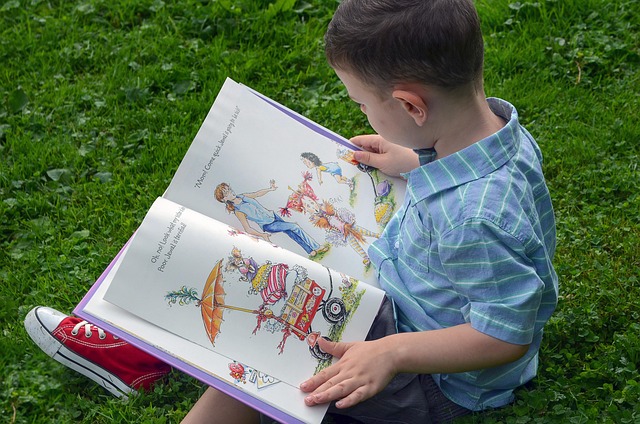
It takes about ten minutes. You sit next to your child on the couch or at the kitchen table and open it on a laptop or tablet. It walks you through the same foundational skills that K–2 teachers assess in their benchmark testing. Your child reads letters, sounds, and words aloud. You tap correct or incorrect. Each section stops when your child hits their ceiling.
At the end, you get a plain-language report: a specific reading level on a Pre-K through second-grade scale (with fall, winter, and spring markers, so you get real precision rather than a broad bucket), a clear list of what your child has mastered, the next skills to focus on, and a few book recommendations matched to where they are right now. No login. No credit card. No sales pitch buried at the end.
It is not a diagnostic for dyslexia or a learning difference. That requires a trained specialist, and if you have concerns in that direction, please pursue that conversation with your pediatrician and school. This is also not a replacement for your child’s teacher or school. It is a starting point: a way to walk into your next conversation with a concrete baseline rather than a worry you can’t quite name.
What to do with the result
If your child is on track or ahead: keep doing what you are doing. Whatever is working at home and at school, keep it going.
If there is a gap on a specific skill, you now have something concrete to bring to your child’s teacher. Not “I’m a little worried” but “the assessment placed her at winter of kindergarten, and I’d love to understand how that maps to what you’re seeing in class.” That is a different conversation. Your teacher will almost certainly welcome the specificity, and together you can figure out the right next steps, whether that means adjusting what’s happening at school, finding a reading program that fits your family’s time and budget, or simply monitoring progress more closely over the next few months.
There are good reading programs and resources out there. The right one depends on your child’s specific skills, your schedule, and what you’re looking to work on. Trusted educators, your school’s reading specialist if they have one, and evidence-based resources can all help you find the right fit. The reading check just gives you a clearer picture of what you’re looking for before you start.
The NYT piece ends with advice for parents: ask your child’s teacher directly whether they are performing at grade level, and when grades and test scores tell different stories, take the test scores seriously.
I’d add one thing to that list. Before the next conference, take ten minutes and find out for yourself.
Take the free Once Reading Check at tryonce.com/reading-check
Free. About ten minutes. Plain-language results by email. Designed for children ages 3 to 7.
___________________________________________________________________
Sebastian Turner is a co-founder of Once, a science-of-reading-based early literacy program. He lives in Oakland and is expecting his first child. He previously taught in the classroom before moving into education technology. Once’s free Reading Check is available at tryonce.com/reading-check.