










There are moments when grief hits me with a force that feels almost childish — not because the feelings are small, but because I still feel too young to be carrying something this heavy. I haven’t even gone through perimenopause yet. I’m still in the thick of raising a little kid; I have so much advice I still need to seek from my mom, and I still crave my mom’s cooking every day. And yet, the most important woman in my life is gone. It feels like a chapter of my life ended before I even had the chance to read it.
And in the quiet moments — the ones after bedtime, or in the car, or when I’m folding laundry — the questions creep in. Have I done enough? Could I have done more to prevent or treat her illness? Should I have seen something sooner? Said something? Fought harder? Moved closer? Grief is never just sadness. It’s a thousand what-ifs that loop endlessly, even when you know, logically, that you didn’t cause this and you couldn’t have stopped it.
But logic doesn’t quiet the ache. Logic doesn’t silence the guilt.
Because the truth is, I hate that she suffered. I hate that her life was cut short. And sometimes, I hate myself for mourning what I lost when the real injustice is what was taken from her. She deserved more years, more joy, more ordinary days. She deserved to watch her grandchild grow up. She deserved to be here.
And yet, I’m left holding both truths at once: the devastation of her suffering and the devastation of her absence.
There’s one memory that replays in my mind more vividly than almost anything else. I was in my early twenties, at the very beginning of my career, visiting home before flying back across the world. We were standing in the living room — nothing dramatic, nothing cinematic — just a regular moment before a long flight.
She turned to me and said, so simply, “I will really miss you. Will you miss me too?”
I didn’t know then how much that moment would haunt me. How much I would cling to it. How much I would wish I had spent more time simply living with her, holding her longer, looking at her longer, telling her more. I didn’t know that one day I would replay her voice in my head, trying to memorize the exact tone, the exact softness, the exact way she averted her eyes from me in wistful anticipation of my response.
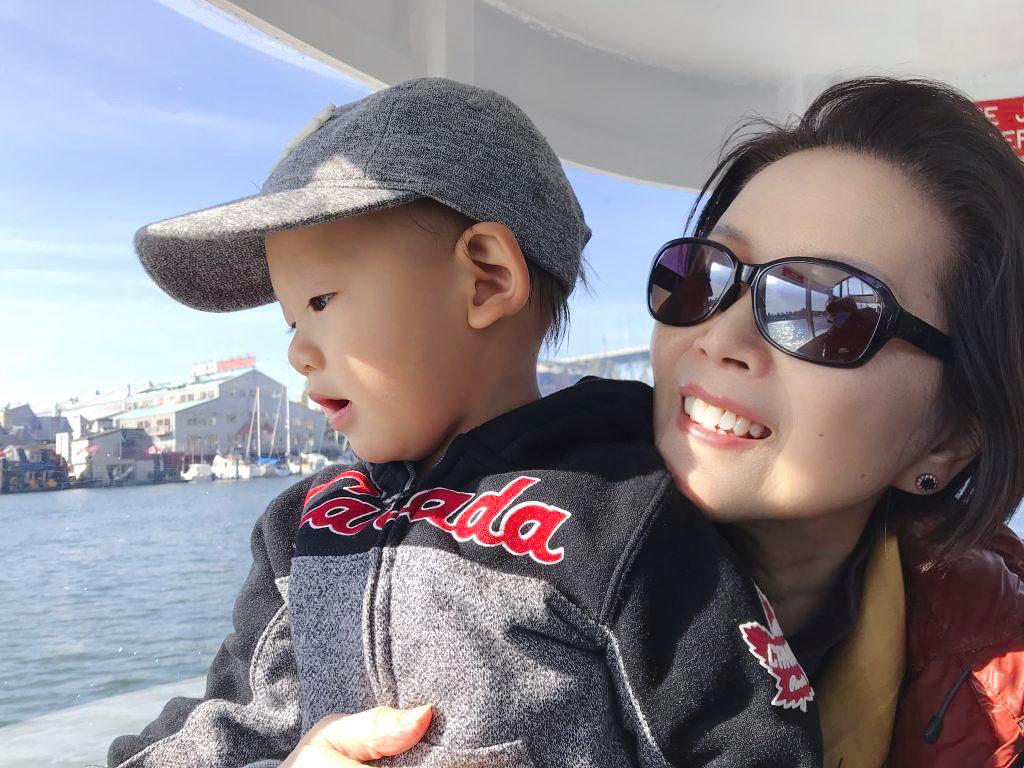 My grief is evolving. It is no longer centered just on losing her, but on the terrifying possibility that my child might forget her — that he might forget the grandmother who loved him with a kind of devotion that felt almost bigger than motherhood itself. The woman who probably loved him even more fiercely than she ever loved me. The one she would drop everything for. The one whose entire body lit up by my son’s presence, even on a video call.
I didn’t know that one day I might be the only person left who remembers the way she held him, the way she says his name in utter delight, the way she gently fed him by the spoonful, the way she fusses over his every small need, the way she looked at him like he was the center of the universe.
I didn’t know that one day I would be raising a child who once knew her so intimately, so joyfully, and yet might grow up with only a fading outline of her in his memory. That I would be the one terrified of time erasing what they had.
How can I become the archivist of their super special bond when only they themselves can truly understand it?
Grief as a millennial mom is a strange, disorienting duality. You’re young enough to still need your parents’ guidance, but old enough to take up a caretaker role. You’re building a family while losing the person who built you. You’re trying to stay present for your kids while part of you is still standing in that living room, hearing her say she’ll miss you.
And yet, grief has softened and hardened me in ways I didn’t expect. It’s made me more tender with my child, more aware of how fleeting everything is. It’s made me hold him tighter, linger longer, savor the ordinary moments I used to rush through. It’s made me realize that love doesn’t disappear — it just changes form. It becomes the way you parent, the way you show up, the way you remember. It made me fearless of facing uncertainty, taking up opportunities, setting boundaries, and taking more risks to do life justice in her honor.
If you’re a mom grieving a parent, I hope you know this: the what-ifs don’t mean you failed. The guilt doesn’t mean you caused anything. The longing doesn’t make you selfish. You’re allowed to mourn what you lost and what they lost, too.
You’re allowed to be both the daughter who still needs her mom and the mother who keeps going anyway.
This is the quiet inheritance of grief — learning to carry love in its ever-changing form, and choosing to live a life full of the things they taught you to cherish.